
Our services
Electric Oven Repair in Plymouth, Devon and Cornwall
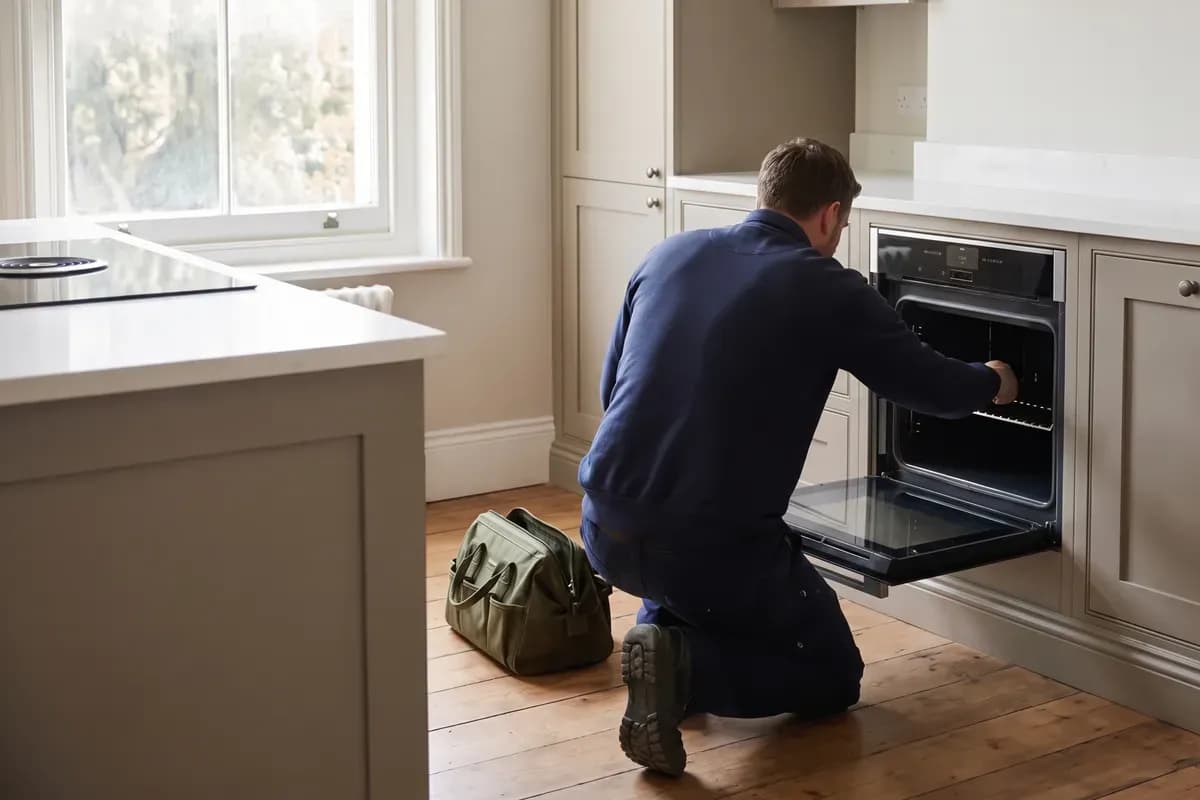
Electric oven repair covers built-in and freestanding electric ovens that will not heat up, cook unevenly, trip the electrics, have a fan that will not turn or a door that will not close properly. We diagnose the fault in your kitchen and agree the cost before any work. Electric ovens only, no gas.
01How it works
Electric Oven Repair, explained
How it works
Your electric oven, properly understood
An electric oven relies on a series of heating elements, a thermostat and a selector switch to control the temperature and cooking mode. In a standard fan oven, a circular element surrounds a fan blade at the back of the cavity. When you select a temperature, power flows to this element, and the fan distributes the heat evenly around the food. Conventional ovens use top and bottom elements to create distinct heat zones. The thermostat monitors the internal temperature, cutting the power to the elements once the target heat is reached and switching it back on as the oven cools.
Why it fails
What wears out
Heating elements endure immense thermal stress and eventually fail when the internal wire breaks or the outer casing splits. If the fan motor seizes or burns out, the element will overheat and fail shortly after. Thermostats can drift out of calibration or fail completely, causing the oven to burn food or remain cold. Selector switches suffer from burnt contacts due to the high electrical current they handle, preventing power from reaching specific components. Door hinges and seals degrade over time, letting heat escape and forcing the oven to work harder to maintain temperature.
Electric Ovens check
- Heating elements
- Fan and fan motor
- Thermostat
- Door seal and hinges
- Switches and controls
- Wiring and connections
A proper diagnosis
From your call to repaired
Diagnosing an electric oven fault requires testing the electrical components in the kitchen where the appliance is fitted. A multimeter is used to check the continuity of the heating elements, the thermal cut-outs and the thermostat. If the oven trips the electrics, an insulation resistance test helps locate the component leaking current to earth. Inspecting the selector switch for heat damage and checking the fan motor for mechanical resistance confirms which parts have failed. All Appliance Care covers Plymouth and the surrounding areas for these electric oven repairs.
- 01You get in touchCall or send an enquiry. Tell us what it is doing, and the make and model if you have them.
- 02We come to your homeThe fault is diagnosed where the appliance stands.
- 03It is repairedThe repair is carried out in your home.
02Know the signs
When it is time to call us
01
The oven takes much longer than usual to reach the set temperature.
02
The cooling fan continues to run long after the oven is switched off.
03
The main oven trips the electrics as soon as it is turned on.
04
The digital clock flashes and the oven refuses to start any cooking programme.
05
You can feel hot air escaping from the sides of the closed oven door.
06
The grill element works perfectly but the main fan oven remains completely cold.
03Common faults
What usually lies behind it
01
Oven fan runs but there is no heat
The circular heating element surrounding the fan has likely failed. The fan continues to circulate air, but without a working element, the oven remains cold. Testing the element for electrical continuity will confirm if the internal wire has broken and needs replacing.
02
Electric oven trips the main circuit breaker
A component is leaking electrical current to earth, causing the safety breaker to trip. This is usually caused by a split heating element, a faulty fan motor or degraded wiring insulation. An insulation resistance test identifies exactly which part is causing the electrical fault.
03
Food cooks unevenly or burns on top
Uneven cooking points to a failed fan motor or a faulty thermostat. If the fan stops turning, heat gathers at the top of the oven. If the thermostat fails to regulate the temperature, the elements stay on continuously and burn the food.
04
Oven door will not close tightly
Worn door hinges or a damaged rubber seal prevent the door from shutting properly. Heat escapes from the gap, melting the control knobs and forcing the heating elements to stay on longer. Replacing the hinges or the seal restores the correct internal temperature.
05
Oven is completely dead with no display
A completely dead oven suggests a problem with the incoming power supply, a blown thermal fuse or a failed main control board. The terminal block at the back of the appliance can also suffer from loose connections that burn out and cut the power.
04Questions
Electric Ovens: your questions
Not answered here? Tell us the make, the model and what the appliance is doing.
Call 01752 922765No. We repair electric ovens only.
The thermostat is responsible for turning the heating elements off when the oven reaches the correct temperature. If the thermostat fails, the elements continue to heat without stopping. This causes the internal temperature to rise uncontrollably, burning your food regardless of the setting you have chosen.
Yes, All Appliance Care repairs both built-in electric ovens and freestanding electric cookers. The internal components, such as the heating elements, thermostats and fan motors, operate on the same principles in both types of appliance. We diagnose and repair these faults in your kitchen where the appliance is installed.
A noisy fan is usually caused by worn bearings inside the fan motor. As the bearings degrade, the fan blade vibrates and creates a loud rattling or rumbling sound during cooking. If left unresolved, the motor will eventually seize, which can cause the heating element to overheat and fail.
The inner glass panel is held in place by metal brackets, screws or high-temperature adhesive, depending on the model. Over time, the constant heating and cooling cycles can cause the brackets to loosen or the adhesive to degrade. The door must be dismantled to secure the glass properly.
05Where we work
Electric Ovens in your town
Choose your town for electric oven repair there, nearest to Plymouth first.
Devon