
Our services
Freezer Repair in Plymouth, Devon and Cornwall
Freezer repair covers upright and chest freezers that are not holding temperature, icing up, running constantly or sounding an alarm. We diagnose the fault at your home, explain it and agree the cost with you before any work.
01How it works
Freezer Repair, explained
How it works
Your freezer, properly understood
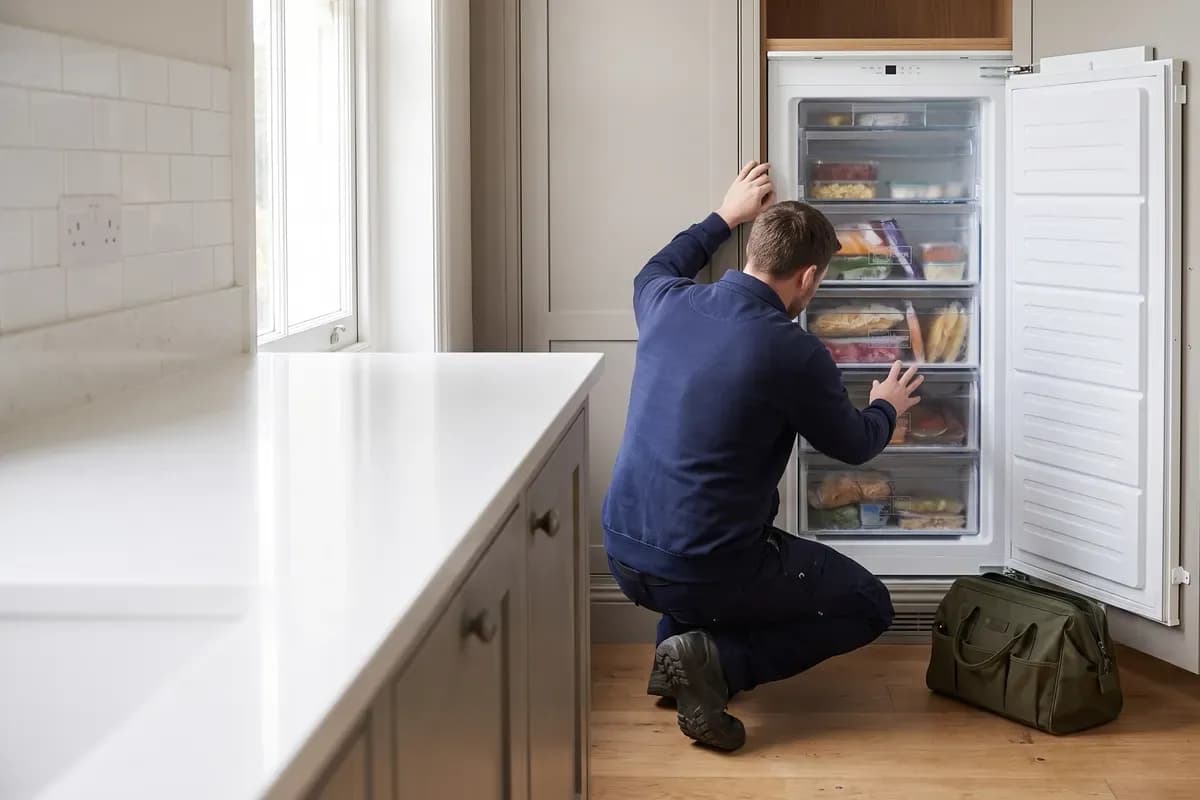
A freezer relies on a sealed system containing refrigerant, a compressor to pump it, and an evaporator coil to absorb heat from the interior cabinet. In frost-free models, a fan actively circulates the cold air around the drawers and compartments. The main control board or a mechanical thermostat monitors the internal temperature, switching the compressor on and off as needed to maintain a steady, deep freeze. When everything operates correctly, the appliance keeps food safely frozen with minimal effort. Faults develop when these internal components degrade or when airflow becomes restricted. A failed defrost heater, thermostat or timer allows thick ice to smother the evaporator coil, completely preventing cold air from circulating. Compressors can develop internal mechanical faults or electrical starting issues, leaving the cabinet warm while the motor simply hums or clicks. Furthermore, door seals can split or lose their magnetic grip over time. This lets warm, moist room air into the appliance, which rapidly turns into heavy frost and forces the cooling system to run continuously. Finding the exact cause of a cooling failure requires checking both the mechanical and electrical parts. A multimeter is used to test the electrical continuity of defrost heaters, thermostats and temperature sensors. The compressor relays and capacitors are inspected for signs of electrical failure or burning. The door seals and hinges are also checked, because the cabinet has to stay airtight. At All Appliance Care, we diagnose upright and chest freezers in homes across Plymouth and the surrounding areas in Devon and Cornwall.
02Know the signs
When it is time to call us
01
The temperature alarm keeps beeping or flashing a red warning light.
02
Thick ice is forming on the shelves and making drawers stick.
03
The compressor motor runs continuously without ever cycling off to rest.
04
Food is soft or thawing despite the thermostat being set correctly.
05
The rubber door seal is visibly torn or hanging loose.
06
The appliance is completely silent and the internal cabinet feels warm.
03Common faults
What usually lies behind it
01
Heavy frost and ice build-up
Frost-free freezers use a heater to melt ice off the cooling coils. If the heater, defrost timer or sensor fails, ice builds up and blocks the airflow. This stops the appliance from cooling properly and can cause the drawers to stick or break when pulled.
02
Freezer is not cold enough
A freezer failing to reach the correct temperature can be caused by a faulty thermostat, a failing compressor or a blocked fan. The internal sensors may be reading the temperature incorrectly, causing the control board to switch the cooling cycle off before the cabinet is cold.
03
Appliance runs constantly without stopping
The compressor should cycle on and off. If it runs continuously, the appliance is struggling to maintain temperature. This happens when warm air leaks through a damaged door seal, or when the condenser coils are covered in dust, preventing the system from releasing heat efficiently.
04
Temperature alarm is sounding
A beeping alarm or a flashing red light indicates that the internal temperature has risen above a safe freezing level. This warning triggers when a door is left ajar, a seal has failed, or a component like the start relay has stopped the compressor from running.
05
Split or damaged door seals
The rubber gasket around the door keeps cold air inside and warm air out. When the seal splits, tears or loses its magnetic pull, moisture enters the cabinet and freezes. This creates excessive frost, forces the motor to work harder and increases electricity consumption.
04Questions
Freezers: your questions
Not answered here? Tell us the make, the model and what the appliance is doing.
Call 01752 922765Heavy ice is often caused by a worn door seal or a door left ajar, but it can also point to a fault. We check the seal and the freezer's operation to find the cause.
Frost-free models have an automatic defrost cycle that melts ice away from the hidden cooling coils. If the defrost heater, timer or thermostat fails, this cycle stops working. Ice then accumulates rapidly, blocking the internal fan and preventing cold air from circulating around your frozen food.
An alarm means the internal temperature has risen too high. Check that the door is fully closed and the seal is intact. If the door is shut but the appliance is not cooling, there may be a fault with the compressor or thermostat requiring a proper electrical diagnosis.
Yes, All Appliance Care repairs both upright and chest freezers in customers' homes. We do not work on commercial refrigeration units or any gas appliances.
A freezer runs constantly when it struggles to reach the set temperature. This happens if warm air is leaking through a split door seal, or if the condenser coils are unable to release heat. A failing compressor or a faulty temperature sensor can also cause continuous running.
05Where we work
Freezers in your town
Choose your town for freezer repair there, nearest to Plymouth first.
Devon